
Squats are already one of the best moves for your legs and glutes. But when you switch to a wide stance, you unlock a whole new level of strength.
That’s where the sumo squat comes in.
Unlike regular squats, sumo squats turn your toes out and widen your stance.
This small change makes a big difference, it targets your inner thighs while still working your glutes, quads, and hamstrings. It also challenges your core, balance, and hip mobility all at once.
And the best thing about this? Sumo squats can grow with you. Whether you’re just starting out or looking for a tougher variation, there’s a way to scale them to your fitness level.
In this guide, you’ll learn 5 progressions of the sumo squat, starting with bodyweight basics and building up to advanced variations.
Each step is beginner-friendly, easy to follow, and designed to help you build strength safely.
Why Sumo Squats Stand Out
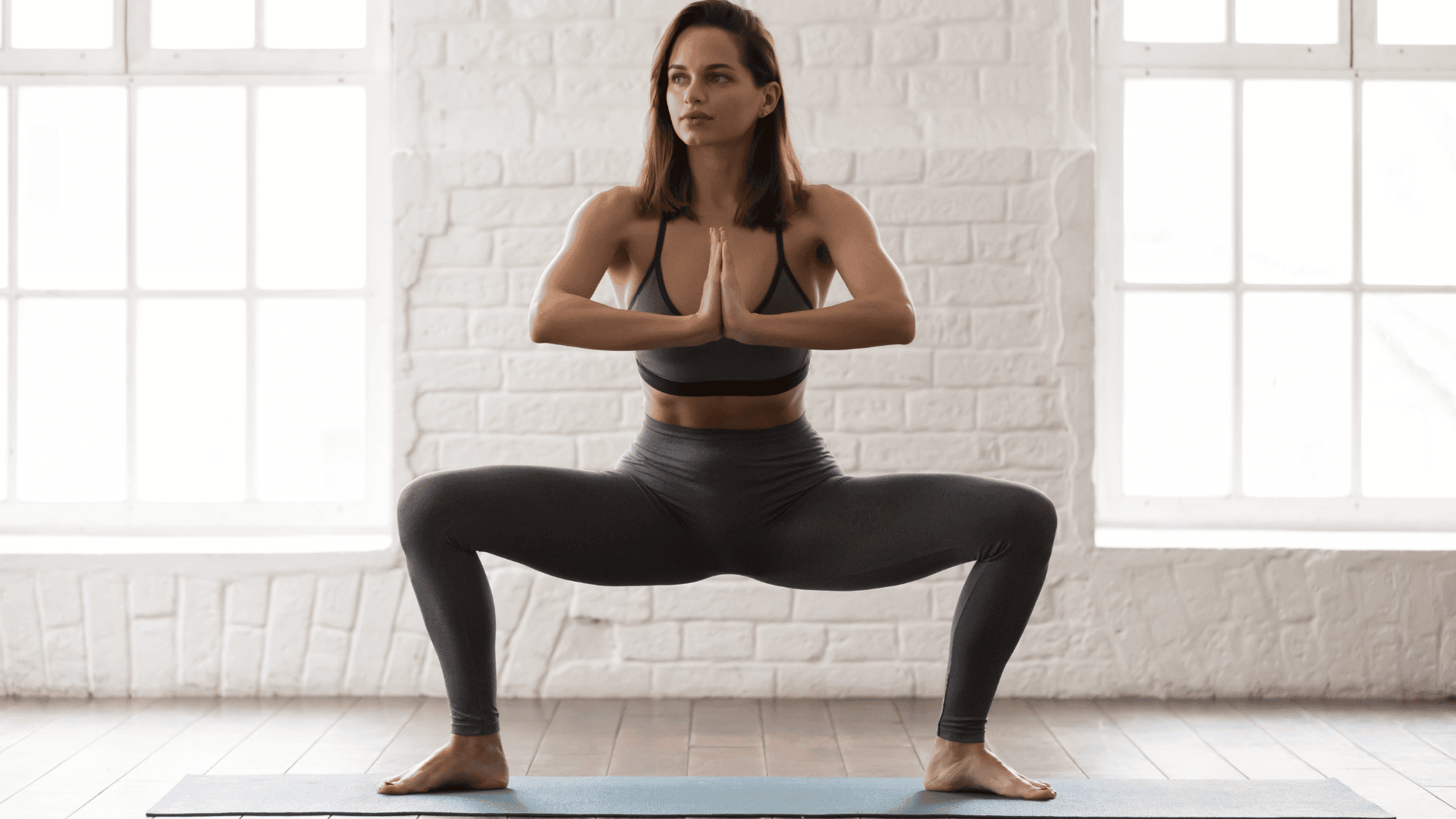
Not all squats are created equal.
The sumo squat sets itself apart with one small but powerful change: the stance.
By turning your toes out and stepping wider than a regular squat, you shift the focus to muscles that often get left behind.
The inner thighs (adductors) are the main stars here. Along with them, your glutes, quads, hamstrings, and core all join in.
This makes sumo squats a full lower-body move with extra attention to areas that shape balance and strength.
Compared to the classic squat, the wider stance changes more than just how your legs look. It trains your hips to move better, your balance to stay steadier, and your core to stay braced throughout.
That’s why sumo squats are often used to boost hip mobility and functional strength, skills you’ll notice not just in the gym, but in daily life.
For those folks with busy schedules and big goals, this makes sumo squats a smart choice: one exercise that tones, strengthens, and supports how your body moves every day.
5 Beginner-to-Advanced Sumo Squat Progressions
The sumo squat isn’t just one move. You can scale it from very simple to more advanced depending on your strength and comfort.
Here are five progressions, starting with bodyweight basics and moving up to challenging variations.
1. Bodyweight Sumo Squat (Beginner)
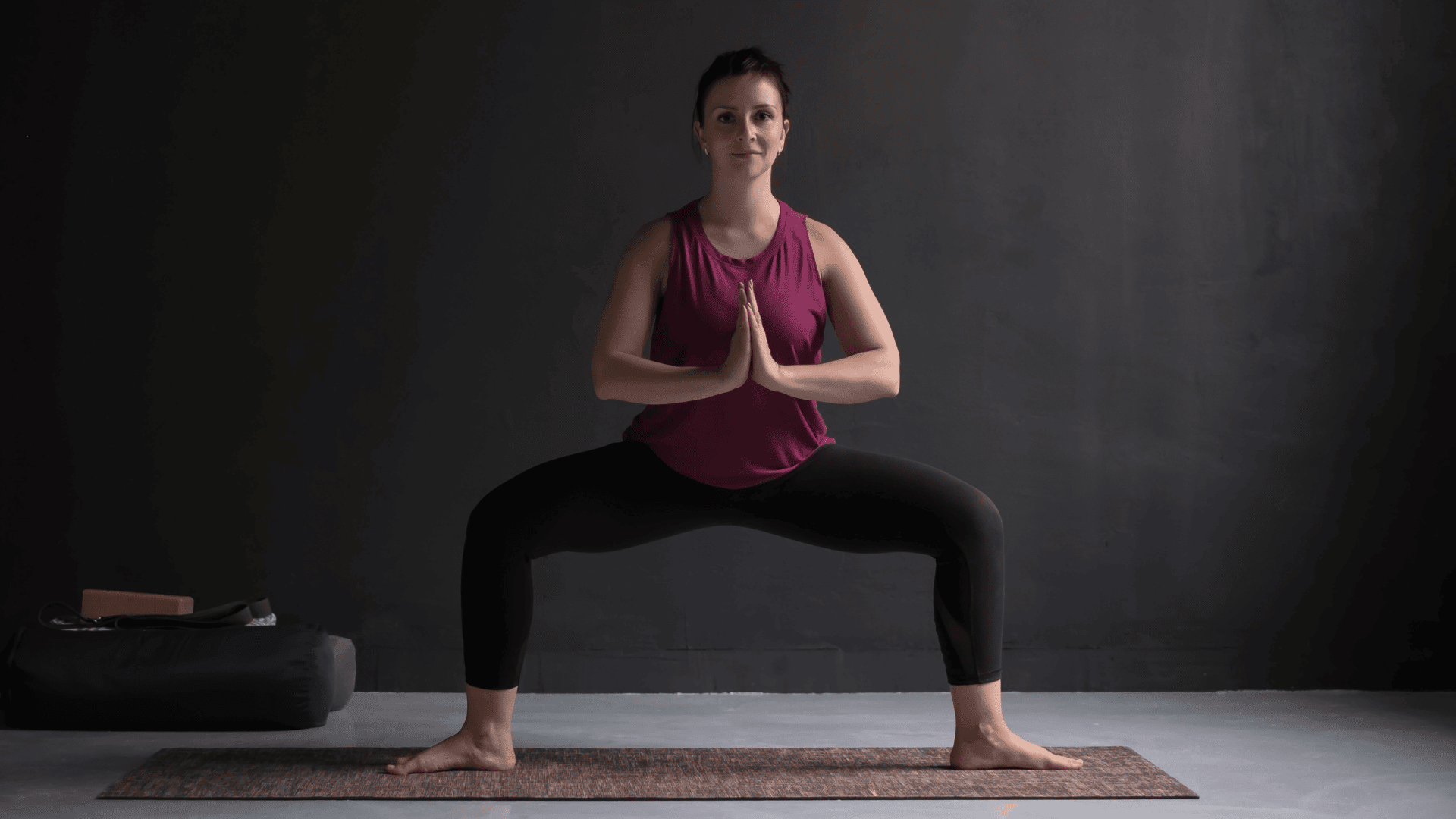
This is where you learn the foundation.
- Starting stance: Stand with your feet wider than shoulder-width. Point your toes out at about a 45° angle.
- Brace your core: Pull your belly button slightly in and keep your chest lifted.
- Lower down: Push your hips back as if sitting into a chair. Bend your knees and lower until your thighs are close to parallel with the floor.
- Stand tall: Drive through your heels to return to standing, squeezing your glutes at the top.
Common mistakes: Letting your knees cave inward, leaning too far forward, or letting your heels come off the ground.
Sets/reps: Start with 2–3 sets of 10–12 reps.
Best for: Building confidence and learning the right form before adding resistance.
2. Chair Tap Sumo Squat (Beginner–Intermediate)
Once you’re comfortable with the bodyweight squat, the chair version helps you train balance and squat depth.
- Setup: Place a sturdy chair behind you. Step into a wide sumo stance, toes pointed out.
- Lower with control: Push your hips back and bend your knees until your glutes lightly touch the chair.
- Stand tall: Push through your heels to rise back up, keeping your chest up the whole time.
Why it works: The chair gives you a clear depth target and helps prevent leaning forward.
Sets/reps: 2–3 sets of 8–10 reps.
Beginner tip: Move slowly, don’t “plop” onto the chair. Light contact is enough.
3. Goblet Sumo Squat (Intermediate)
When bodyweight feels easy, add resistance with a dumbbell, kettlebell, or even a backpack.
- Hold the weight: Grip it close to your chest with both hands (like holding a goblet).
- Lower down: With feet in a sumo stance, squat by pushing hips back and bending knees. Keep your elbows inside your knees as you go lower.
- Stand tall: Drive up through your heels, keeping the weight close to your body.
Benefits: Extra resistance builds strength in your thighs, glutes, and core.
Sets/reps: 3–4 sets of 10–12 reps.
Upgrade tip: Add a 1–2 second pause at the bottom for more control and muscle activation.
4. Resistance Band Sumo Squat (Intermediate)

This version adds tension with a resistance band to keep your form sharp and challenge your hips.
- Setup: Loop a band above your knees and step into a wide stance.
- Lower down: Perform a sumo squat, pressing your knees outward against the band as you move.
- Stand tall: Push through your heels and squeeze your glutes while keeping tension on the band.
Why it works: The band forces your hips and glutes to stay engaged, which stops your knees from caving inward.
Sets/reps: 3 sets of 12–15 reps.
Pro tip: Pair this with lunges or glute bridges for a stronger lower-body routine.
5. Advanced Variations (Stronger Progressions)

When you’ve mastered the basics, these advanced moves keep your muscles guessing.
- Sumo Squat with Rotation: Lower into a squat, then as you rise, rotate your torso to one side and return to center. Alternate sides each rep for added core engagement.
- Tempo or Pause Sumo Squats: Slow your descent to 3–4 seconds, pause at the bottom, then rise back up with control.
- Weighted Sumo Squats: Use heavier dumbbells, kettlebells, or a barbell held at your chest or shoulders.
Why it works: These variations improve stability, endurance, and balance while building serious lower-body strength.
Sets/reps: 3–4 sets of 8–10 reps, adjusting based on weight and intensity.
Mistakes That Can Throw Off Your Sumo Squats

Form makes all the difference with sumo squats. Even small errors can shift the work away from your thighs and glutes or put extra stress on your knees and back.
Here are the most common mistakes to watch for and how to fix them.
Knees Caving Inward
When your knees collapse toward each other, your inner thighs and glutes stop working the way they should. This also strains your joints.
Fix it: Think about pressing your knees outward as you squat. Imagine spreading the floor apart with your feet. This keeps your hips engaged and your knees aligned with your toes.
Rounding the Back
Letting your back round forward puts pressure on your spine and takes away core stability.
Fix it: Keep your chest lifted and brace your abs. Looking forward instead of down can also help keep your back in a neutral position.
Leaning Too Far Forward
If you tip forward, most of the work shifts into your lower back instead of your legs.
Fix it: Push your hips back as if sitting into a chair, but keep your weight balanced through your heels and mid-foot. A tall chest will help keep your torso steady.
Rushing Reps and Losing Form
Moving too fast often means cutting depth short or letting technique slip.
Fix it: Slow down and focus on clean, controlled movement. Aim for quality over quantity, ten solid squats are better than twenty sloppy ones.
Progressing Too Fast Without Mastering Basics
Adding weight or advanced variations before your form is solid can increase your risk of injury.
Fix it: Build a strong foundation first. Master bodyweight and chair squats before moving on to goblet or banded versions. Once you feel steady and balanced, then add resistance.
Smart Tips to Get the Most From Sumo Squats
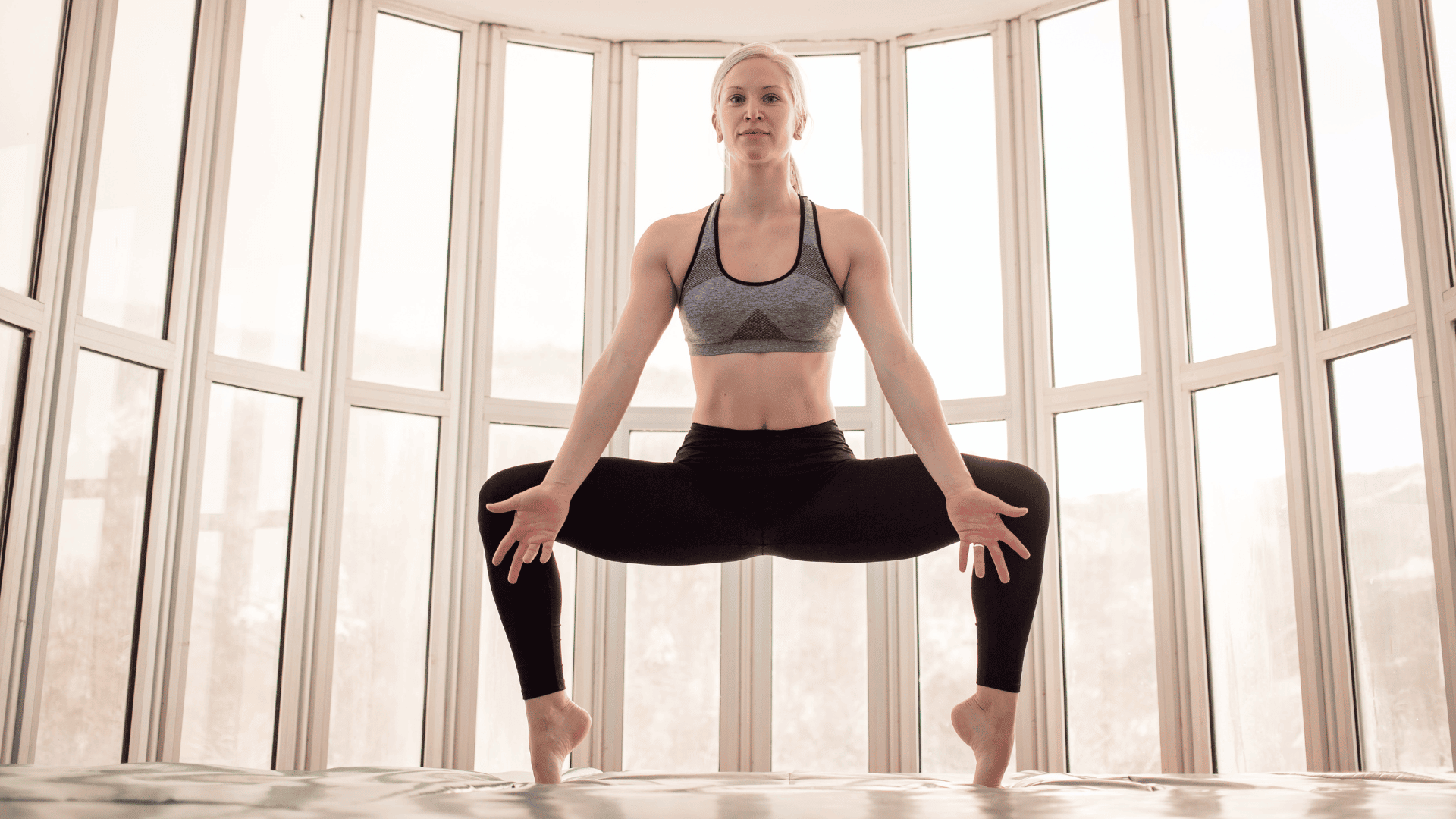
Even when your form is solid, a few small adjustments can make sumo squats safer and more effective. These tips will help you build strength while keeping progress steady.
Focus on Quality Reps, Not Just Numbers
It’s easy to rush through a set, but sloppy reps don’t help much. Clean, controlled squats activate the right muscles and protect your joints.
How to apply it: Aim for each rep to look and feel the same. Ten strong squats are better than twenty rushed ones.
Aim for Good Depth
Going low makes sumo squats more effective because your inner thighs and glutes have to work harder.
How to apply it: Lower until your thighs are at least parallel to the floor, as long as your heels stay down and your chest stays tall. If mobility is limited, go as low as you can with proper form, then work on flexibility over time.
Keep Your Core Engaged
Your abs play a big role in balance and posture during sumo squats. Without them, your back may round or your torso may tip forward.
How to apply it: Brace your core like you’re zipping up tight jeans. Keep this tension as you lower and rise, it supports your spine and steadies your movement.
Add Resistance Gradually
It’s tempting to grab heavy weights too soon, but steady progress builds more lasting strength.
How to apply it: Start with bodyweight or light resistance. Once you can do 3 sets of 12–15 clean reps, then move up in weight or try banded versions.
Stay Consistent
Strength doesn’t show up overnight, it comes from showing up often. Training sumo squats regularly helps your body adapt and get stronger.
How to apply it: Practice them 2–3 times per week. Pair them with other lower-body moves like lunges or hip bridges for a well-rounded routine.
Stronger Legs, One Squat at a Time
Sumo squats aren’t just a variation of the classic squat, they’re a way to build strength from the ground up. With a wider stance, they train your inner thighs, glutes, and core in a way regular squats can’t.
The best part is how adaptable they are. The progressions let you start with bodyweight and slowly work up to resistance bands, weights, and advanced variations.
That means this move works for beginners learning the basics and for more experienced women ready to push harder.
Consistency is what turns sumo squats into results. Add them to your routine two or three times a week, start simple, and progress as your strength grows.
Over time, these small, steady steps add up to stronger legs, better balance, and more confidence in how your body moves.
Ready to Put It Into Action?
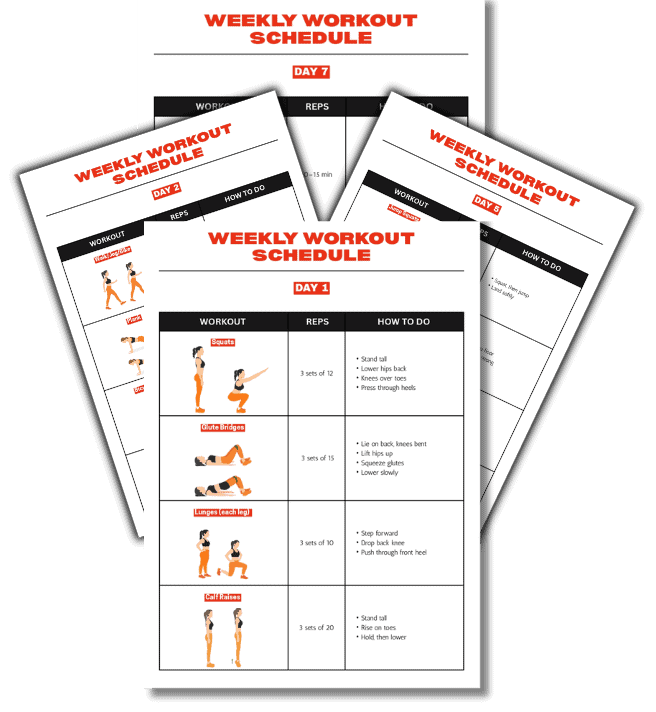
Building strength doesn’t take endless hours, it takes a plan you can stick to. Sumo squats are one piece of the puzzle, but real progress comes when your workouts have structure week after week.
That’s where the Weekly Workout Schedule comes in. It’s a free guide that maps out your training days so you know exactly what to do and when. No guessing. No wasted time. Just a simple plan you can follow to stay consistent.
Frequently Asked Questions
1. What muscles do sumo squats work the most?
Sumo squats mainly target your inner thighs (adductors). They also work your glutes, quads, hamstrings, and core. This makes them a strong lower-body move that hits multiple muscles at once.
2. Are sumo squats harder than regular squats?
They can feel harder at first because the wide stance challenges your balance and flexibility. The move also activates your inner thighs more than a regular squat. With practice, most people find them easier to control once they build strength and mobility.
3. Can beginners safely do sumo squats?
Yes. Beginners can start with bodyweight sumo squats or use a chair for guidance. The key is to move slowly, keep your chest tall, and press your knees outward so they track with your toes. Once form feels solid, you can add light resistance.
4. How often should I add sumo squats into my workouts?
Two to three times per week is a good target. This gives your muscles time to recover while still building strength. You can add them on leg day or as part of a full-body routine.
5. Do sumo squats slim your inner thighs?
They help strengthen and tone your inner thighs, but fat loss depends on your overall routine, workouts, nutrition, and consistency all matter. Sumo squats are great for shaping the area, especially when paired with other lower-body moves and a balanced fitness plan.


