
Sometimes the hardest part of working out isn’t motivation, it’s finding something you can actually do when your body feels stiff, your schedule is full, or your energy is low.
Long days at work, sore joints, or chasing kids around can make traditional workouts feel out of reach.
That’s where chair exercises work great.
With just a sturdy chair, you can train your arms, legs, and core while keeping things gentle on your joints.
These moves aren’t only for seniors or people in recovery, they’re smart options for anyone who wants a safe, low-impact way to stay active. From strength training to simple cardio and stretching, chair exercises cover it all.
And because you stay seated or supported, you don’t have to worry about balance, bulky equipment, or complicated routines.
You just sit, move, and get stronger one rep at a time.
Why Does Chair Workouts Deserve a Spot in Your Routine?
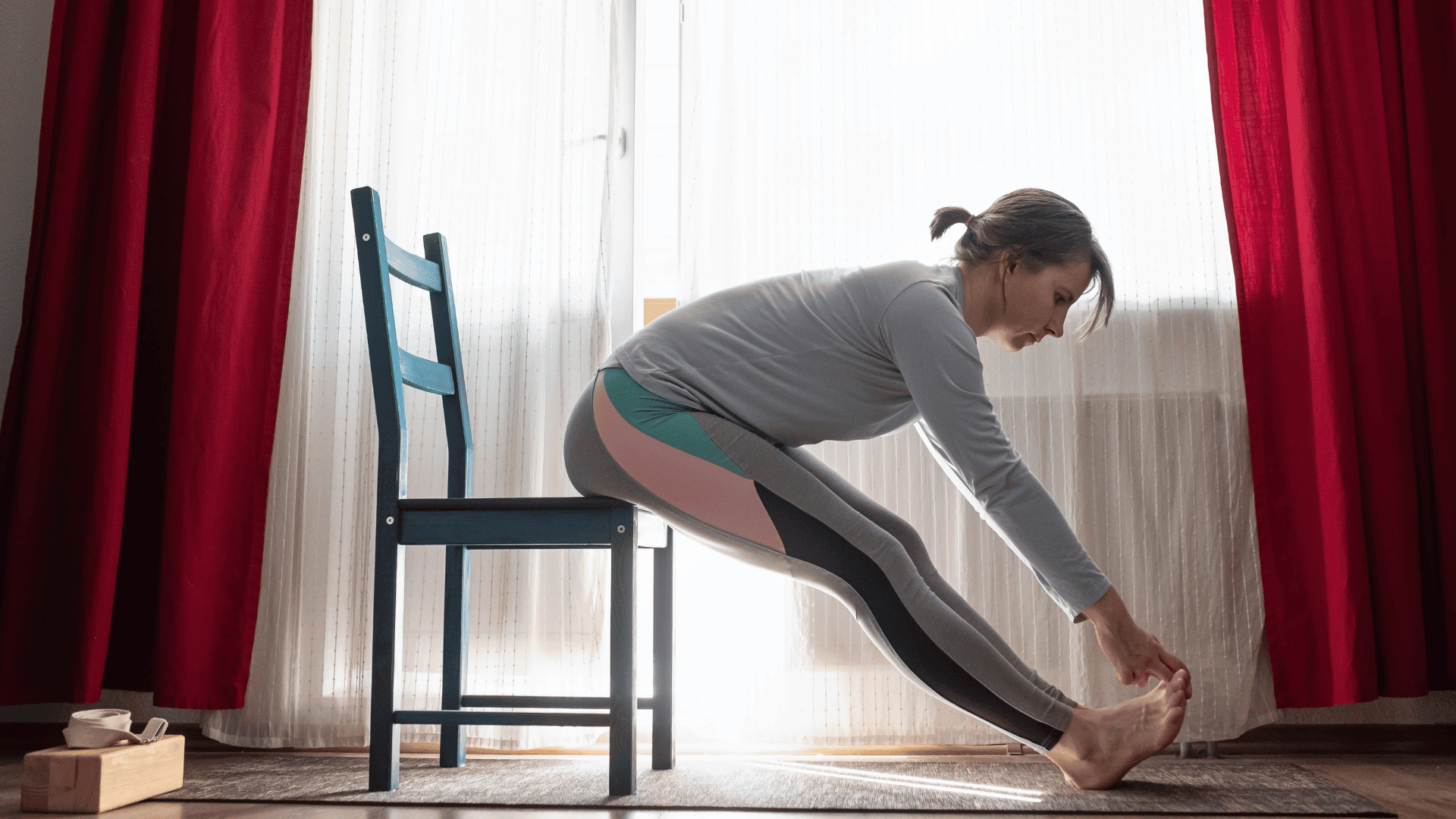
Some days, even rolling out a yoga mat feels like too much. (story of my life)
BUT, that doesn’t mean you need to skip moving altogether.
A simple chair can be the tool that makes exercise possible and practical. You see, chair exercises are great because they keep things joint-friendly while still helping you get stronger and more mobile.
Whether you’re just starting out, dealing with an injury, or simply want a workout that doesn’t take over your day, these moves fit right in.
Here’s what makes them worth adding to your week:
- Low-impact and gentle on joints – perfect if you’re avoiding pain or stiffness.
- Builds functional strength – so daily tasks like lifting groceries or standing up feel easier.
- Improves balance and posture – sitting taller and moving steadier becomes second nature.
- Boosts energy in minutes – no long gym sessions required.
- Takes only one sturdy chair – no fancy setup, no excuses.
15 Chair Exercises to Keep Your Body Moving
Honestly, you don’t need to go to a gym or even have a yoga mat just to get stronger. A sturdy chair is enough to train your whole body, from arms and legs to balance and posture.
These moves are easy to follow, gentle on the joints, and can be done in any room of your home.
Here’s how to do each one:
Upper Body Strength (5 moves)
Your arms, shoulders, and back play a big role in how strong and steady you feel day to day.
These upper body chair exercises focus on simple movements that build muscle, improve posture, and make lifting, reaching, and carrying easier.
All you need is a sturdy chair and, if you want, light weights or household items for extra resistance.
1. Seated Bicep Curls
The first move you can try is the seated bicep curl.
To begin, sit tall with your back supported against the chair and your feet flat on the floor. Once you’re set, hold a light dumbbell, water bottle, or even a soup can in each hand with your arms resting by your sides and your palms facing forward.
Then, slowly bend your elbows to lift the weights toward your shoulders, and lower them back down with control.
This move strengthens your arms so everyday lifting feels easier.
2. Seated Shoulder Press
Another effective move is the seated shoulder press.
To get into position, sit up straight with a weight in each hand. After that, bring your elbows to a bent position with your hands at shoulder level and your palms facing forward.
From here, press your arms straight up toward the ceiling, and then lower them back down with control.
This exercise builds shoulder strength and helps improve posture.
3. Seated Rows (with or without a band)
You can also add seated rows to strengthen your back.
Start by sitting toward the edge of your chair with both feet flat on the floor. Then, hold a resistance band or simply extend your arms straight in front of you.
Next, pull your elbows back as if you were rowing a boat, squeezing your shoulder blades together. Once finished, return to the starting position slowly.
This move trains your back and helps you sit taller.
4. Overhead Arm Circles
For better mobility, try overhead arm circles.
Begin by sitting tall and extending both arms straight above your head. Then, make small circles forward for about 10 to 15 seconds.
Once you finish, switch directions and circle backward for another 10 to 15 seconds.
Keeping the movement slow and steady helps loosen stiff shoulders and improve flexibility.
5. Seated Chest Press (with band or push motion)
The last move in this series is the seated chest press.
To set up, sit tall and place a resistance band behind your back, or if you don’t have one, simply press your palms together in front of your chest. Once you’re ready, push your hands forward until your arms are fully extended.
Then, slowly bring them back in.
This exercise strengthens your chest and arms while also opening up tight shoulders.
Lower Body Strength (4 moves)
Strong legs and hips are what keep you moving with ease.
These lower body chair exercises help train the muscles you use for walking, climbing stairs, and standing up from a chair.
They’re beginner-friendly, joint-safe, and designed to build strength in your thighs, calves, glutes, and core without putting stress on your knees.
6. Sit-to-Stands (Chair Squats)
The first lower body move is the sit-to-stand, also called a chair squat.
To start, sit at the front of your chair with your feet hip-width apart. Once in position, cross your arms at your chest or hold them straight out in front of you for balance. Then, press through your heels to stand up tall.
After reaching the top, slowly lower yourself back down until you’re seated again.
This move builds strength in your legs, glutes, and core while practicing a movement you use every day.
7. Seated Leg Extensions
Another effective move is the seated leg extension.
Begin by sitting tall with your feet flat on the floor. Once you’re steady, straighten one leg out in front of you until it’s parallel to the floor.
Hold that position for about two seconds, then lower your leg back down with control.
After that, switch to the other leg and repeat. This exercise strengthens your quadriceps and supports knee health.
8. Seated Calf Raises
Next, you can try seated calf raises. Sit tall with both feet flat on the floor. From here, lift your heels so that you’re balancing on the balls of your feet.
Then, lower your heels slowly back down to the floor.
This simple but powerful move strengthens your calves and improves ankle stability, which helps with balance and daily walking.
9. Standing Leg Curls (with chair support)
The last lower body move is the standing leg curl. To get started, stand behind your chair and hold onto the backrest for balance.
Then, shift your weight to one leg while bending the other knee, bringing your heel up toward your buttocks. Once you’ve held the curl briefly, lower your leg back down slowly and switch to the other side.
This exercise strengthens your hamstrings without adding strain to your joints.
Cardio & Coordination (3 moves)
Getting your heart rate up doesn’t always mean jumping or running.
These cardio chair exercises give you a gentle but effective way to boost circulation, increase energy, and improve coordination between your arms and legs.
They’re low-impact, safe for your joints, and perfect for adding a little rhythm to your routine.
10. Seated Marching
The first cardio move is seated marching. To begin, sit tall at the edge of your chair so your core is engaged. Then, lift one knee toward your chest and lower it back down.
Once finished, switch to the other leg and continue alternating in a steady rhythm.
This exercise boosts circulation, builds hip mobility, and works your core at the same time.
11. Seated Jumping Jacks
Next, try seated jumping jacks for a safe way to raise your heart rate.
Start by sitting near the edge of the chair. From there, extend your arms overhead while tapping both feet out to the sides.
Then, bring your arms back down as your feet return to the center. Keep repeating this pattern to get a full-body cardio workout without any impact.
12. Arm-and-Leg Coordination March
Another fun option is the arm-and-leg coordination march.
Sit tall and begin marching your legs in place. At the same time, raise your arms overhead as your knees lift, then lower them back down with each step. Keep alternating your arms and legs to stay in rhythm.
This move not only gets your heart pumping but also trains your brain and body to work together, improving coordination.
Flexibility & Posture (3 moves)
Flexibility is the key to moving without stiffness, and posture is what keeps you upright and confident.
These chair stretches are simple ways to release tension, loosen tight muscles, and reset your posture.
They’re also a great way to cool down after strength or cardio work, leaving your body more relaxed and refreshed.
13. Seated Forward Bend Stretch
To improve flexibility, start with the seated forward bend stretch.
Sit near the edge of your chair with your feet flat on the floor. Then, slowly bend forward, sliding your hands down your legs toward your ankles. Hold this position for a few seconds before rolling back up to sitting tall.
This stretch lengthens your back and hamstrings, helping to ease stiffness.
14. Seated Torso Twists
Another great move is the seated torso twist.
To do this, start by sitting tall with your feet flat on the floor and place your hands together in front of your chest. From here, rotate your upper body to the right, return to center, and then rotate to the left.
Keep repeating this movement to strengthen your core and improve spinal mobility.
15. Chest Opener Stretch
Finally, finish with the chest opener stretch. Sit tall and clasp your hands behind your back, or simply reach your arms back as far as you comfortably can.
Gently lift your chest and pull your shoulders back, holding this position for 10 to 15 seconds.
This simple move relieves tightness in your chest and helps you sit or stand taller.
A Simple 7-Day Chair Exercise Plan for Beginners

Having a plan makes it easier to stay consistent.
This 7-day schedule gives you a mix of strength, cardio, and flexibility, all using just a chair. Each session takes 10–20 minutes, so it won’t take over your day.
Here’s how your week can look:
| Day | Focus | Exercises | Why It Helps |
| Day 1 | Mobility & Warm-Up | Seated marching (2 min), Arm circles (10 forward + 10 back), Gentle neck tilts | Loosens stiff joints and gets blood flowing |
| Day 2 | Upper Body Strength | Seated bicep curls (10 reps/arm), Shoulder press (10 reps), Seated rows (10 reps) | Strengthens arms, shoulders, and back |
| Day 3 | Lower Body Strength | Sit-to-stands (10 reps), Calf raises (15 reps), Leg extensions (10 reps/leg) | Builds leg power and supports balance |
| Day 4 | Flexibility & Balance | Forward bend stretch (15 sec), Torso twists (10 each side), Chest opener (15 sec) | Improves posture and eases stiffness |
| Day 5 | Cardio Boost | Seated marching (2 min), Seated jumping jacks (15 reps), Arm-leg coordination march (2 min) | Boosts energy and supports heart health |
| Day 6 | Active Recovery | Gentle seated marches (2 min), Torso twists (10 each side), Shoulder rolls (10 forward + 10 back) | Keeps you moving while letting your body recover |
| Day 7 | Rest | Light walking, Stretching during TV time, Deep breathing | Allows your body to repair and get stronger |
Common Chair Workout Mistakes to Watch Out For
Even the simplest routines can go sideways if you miss a few basics. Chair exercises are safe and practical, but only when done with good form and the right setup.
Here are mistakes that trip people up and how to avoid them:
- Choosing the Wrong Chair – skip chairs with wheels or weak legs; use a sturdy, stationary one.
- Rushing the Moves – slow, steady reps build strength safely. Fast reps often mean sloppy form.
- Skipping Warm-Up or Cool-Down – even two minutes of marching or stretching makes a big difference.
- Pushing Through Pain – discomfort is okay, sharp pain is not. Adjust the move or make it smaller.
- Forgetting Posture – keep chest lifted, shoulders back, and core engaged.
Smart Tips to Get the Most Out of Chair Exercises

Chair workouts are effective on their own, but a few small changes can make them even better. If you want steady progress without feeling overwhelmed, keep these tips in mind:
Start With Just Your Bodyweight
Begin simple. Master each move using only your bodyweight before adding resistance. Once you feel steady, you can hold light dumbbells, resistance bands, or even household items like water bottles.
Slow and Controlled Wins
Speed often leads to sloppy form. Move at a steady pace and focus on squeezing the muscles you’re working. Controlled reps help you build strength safely.
Wear Supportive Shoes
Good footwear matters, even for seated or chair-supported moves. Shoes with grip keep you stable, especially during standing exercises like sit-to-stands or leg curls.
Train a Few Times a Week
Consistency matters more than intensity. Aim for 2–4 chair workouts each week. That’s enough to build strength, improve energy, and see progress without burning out.
Support Your Body With Good Fuel
Exercise works best when paired with balanced nutrition and hydration. Drink water throughout the day and include protein, veggies, and whole grains in your meals to help muscles recover.
These simple adjustments help turn a basic routine into a habit that actually sticks.
Stronger Every Day, Right From Your Chair
Chair exercises may look simple, but don’t mistake that for easy. What makes them powerful is how accessible they are. You don’t need a gym, fancy gear, or even a lot of time, you just need a sturdy chair and a few minutes to move.
The real win is consistency. A handful of reps each day can make climbing stairs feel smoother, lifting groceries feel lighter, and sitting taller feel natural.
These small changes stack up over time, and before you know it, you’ll notice more energy in your mornings and less stiffness at the end of long days.
Think of chair workouts as a tool, not a shortcut. They build strength in your arms and legs, improve balance so you feel steadier, and stretch out tight spots that come from sitting too much.
More importantly, they give you a safe way to stay active, even when life feels too busy or your body needs something lower-impact.
The bottom line?
You don’t have to push hard or go fast to make progress. Show up, move with intention, and give your body a little bit of daily attention.
Those small steps are what lead to big RESULTS.
Ready for Your Next Step?
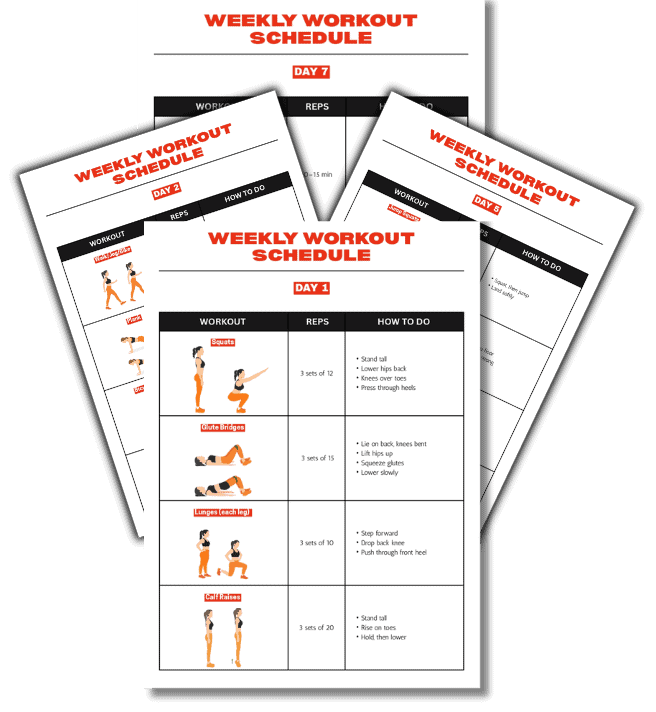
Chair workouts are a great way to start moving, but staying consistent is where the real change happens.
That’s why I created a free Weekly Workout Schedule, a simple plan you can follow without second-guessing what to do next.
This guide takes the guesswork out of your week. No complicated setups, no endless scrolling for “workout ideas.”
Just a clear plan that tells you which type of workout to do each day so you can build strength, boost energy, and stay on track, even with a busy schedule.
Frequently Asked Questions
1. Are chair exercises good for weight loss?
Yes, they can help. Chair workouts raise your heart rate, build strength, and burn calories, all of which support weight loss. For the best results, pair them with balanced meals and regular activity like walking.
2. How often should I do chair exercises each week?
Aim for 2–4 sessions each week. This gives your muscles time to recover while still building consistency. Even 10–15 minutes a few times a week can make a difference over time.
3. Do I need equipment for chair workouts?
No equipment is required to start. Your bodyweight is enough. If you want to challenge yourself later, you can add light dumbbells, resistance bands, or even household items like water bottles.
4. Are chair exercises safe for seniors or people with arthritis?
Yes, as long as you use a sturdy chair and move at your own pace. Chair exercises are low-impact, joint-friendly, and easily modified. If you have chronic pain or medical concerns, check with your doctor before starting.
5. What’s the best time of day to do chair exercises?
The best time is the one you’ll stick to. Some people enjoy moving in the morning for energy, while others prefer evenings to relax after work. Pick a time that fits your routine so you can stay consistent.


