
Does your back feel stiff by the middle of the day?
Maybe your shoulders feel tense, your lower back aches from sitting too long, or standing still just feels… weird.
If you’ve been hunched over a laptop, stuck in traffic, or curled up on the couch like a human croissant, chances are your back’s way tighter than it should be.
And yep — that tension adds up fast, even if you don’t notice it right away.
But here’s the thing.
You don’t need a luxurious massage or some relaxing yoga exercise just to feel better. Just a few simple stretches can help a lot, and you can do them in under 10 minutes. (even in your pajamas)
This guide gives you 9 beginner-friendly stretches that actually feel good, and that you can sneak in anytime your posture starts slipping.
Scroll down or save this for when your body starts feeling stiff (again).
Why Your Back Feels So Tight
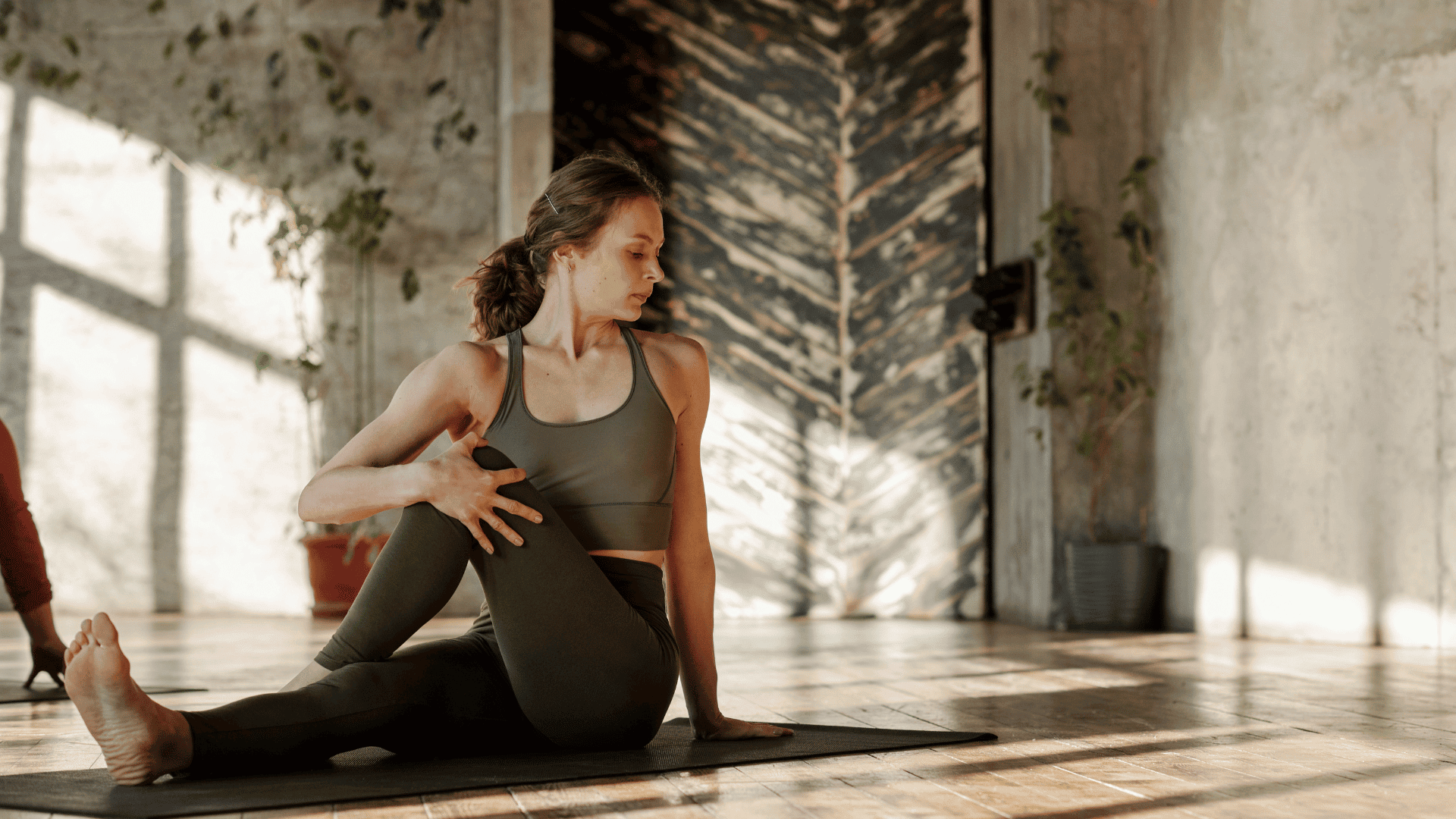
Your back doesn’t feel tight just because you’re getting older — it’s more about how you spend your day.
For starters, sitting too much can make everything stiff.
Whether you’re working at a desk, driving, or watching Netflix, staying in one position for hours shortens the muscles in your hips, spine, and shoulders. When those muscles stop doing their job, your back steps in and takes the hit.
Stress also plays a big role. It tends to land on your neck and shoulders without you even noticing. If you’ve ever realized you’re clenching your jaw or tensing your upper back, that’s stress. (and it builds up quickly)
How you sleep matters too. A lumpy pillow, a weird sleeping position, or a mattress that doesn’t support you can leave your spine out of alignment. You can sleep for eight hours and still wake up feeling sore.
And if you’re not moving much during the day? That tightness just keeps piling on. Muscles need movement to stay loose — otherwise, they get stiff and sluggish.
The upside?
A few minutes of the right stretches can start to undo all of that. And they’re easier than you think.
9 Easy Stretches to Loosen a Tight Back
If your back feels tight, your shoulders are stiff, or your posture’s looking a little slouchy, you’re not stuck that way. These nine simple stretches are quick, gentle, and easy to follow.
You can do them in your bedroom, your living room, or even during a break from work (yes, even in your oversized hoodie and bedhead — we won’t judge).
Each one targets the muscles that get tight from sitting too much, stressing out, or just not moving enough. Do one or two to take the edge off, or run through all nine for a full reset
1. Cat-Cow Stretch
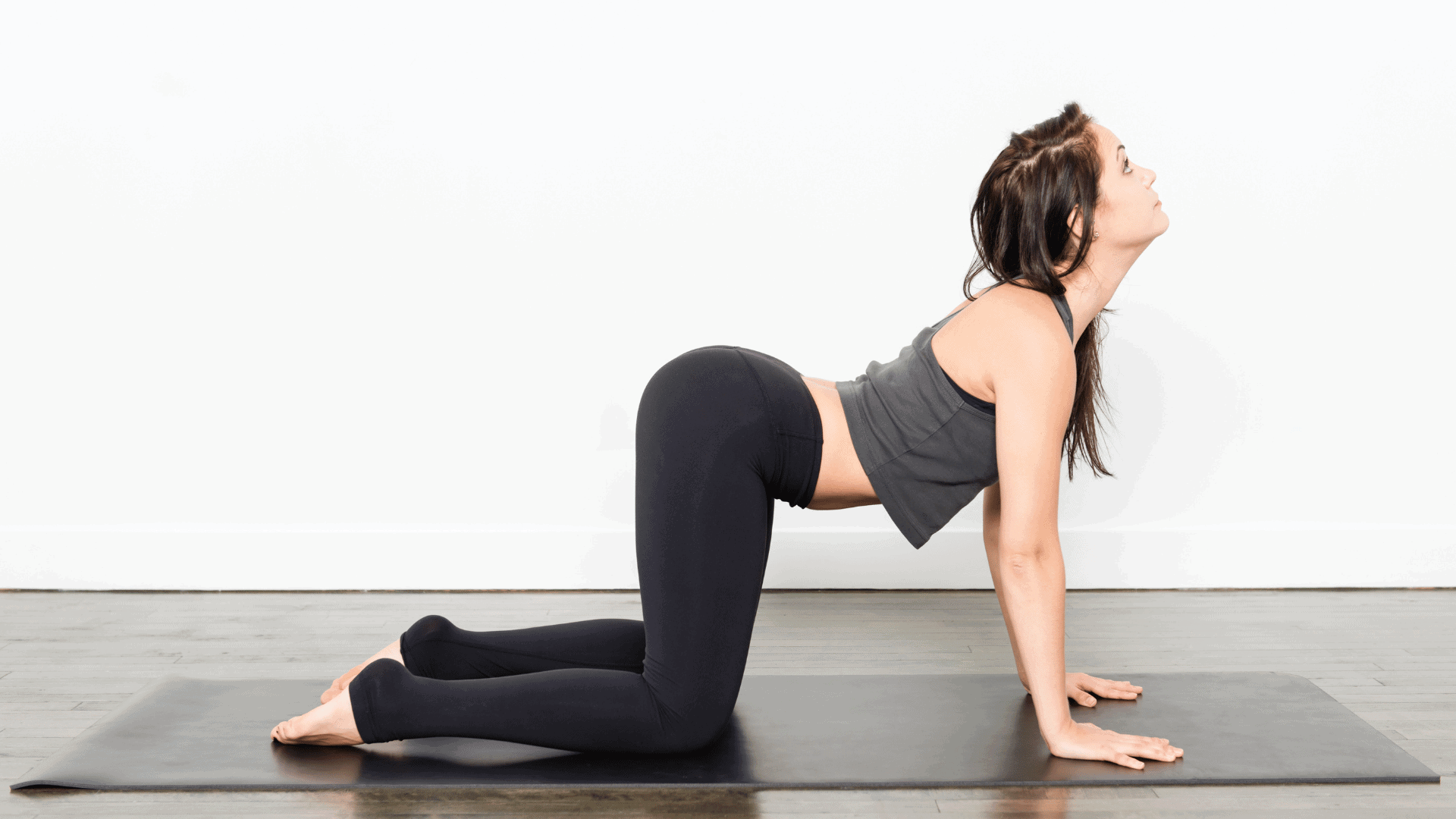
Target: Loosens up your whole spine, from neck to low back.
How to do it:
Start on your hands and knees. Line up your wrists under your shoulders and your knees under your hips.
Then, as you inhale, slowly arch your back and lift your head and tailbone slightly (cow position).
And as you exhale, round your spine up toward the ceiling, tuck your chin to your chest, and press the floor away (cat position).
Move back and forth like this for 30 to 60 seconds.
Safety tip: Let your breath lead the movement. Don’t rush.
2. Child’s Pose
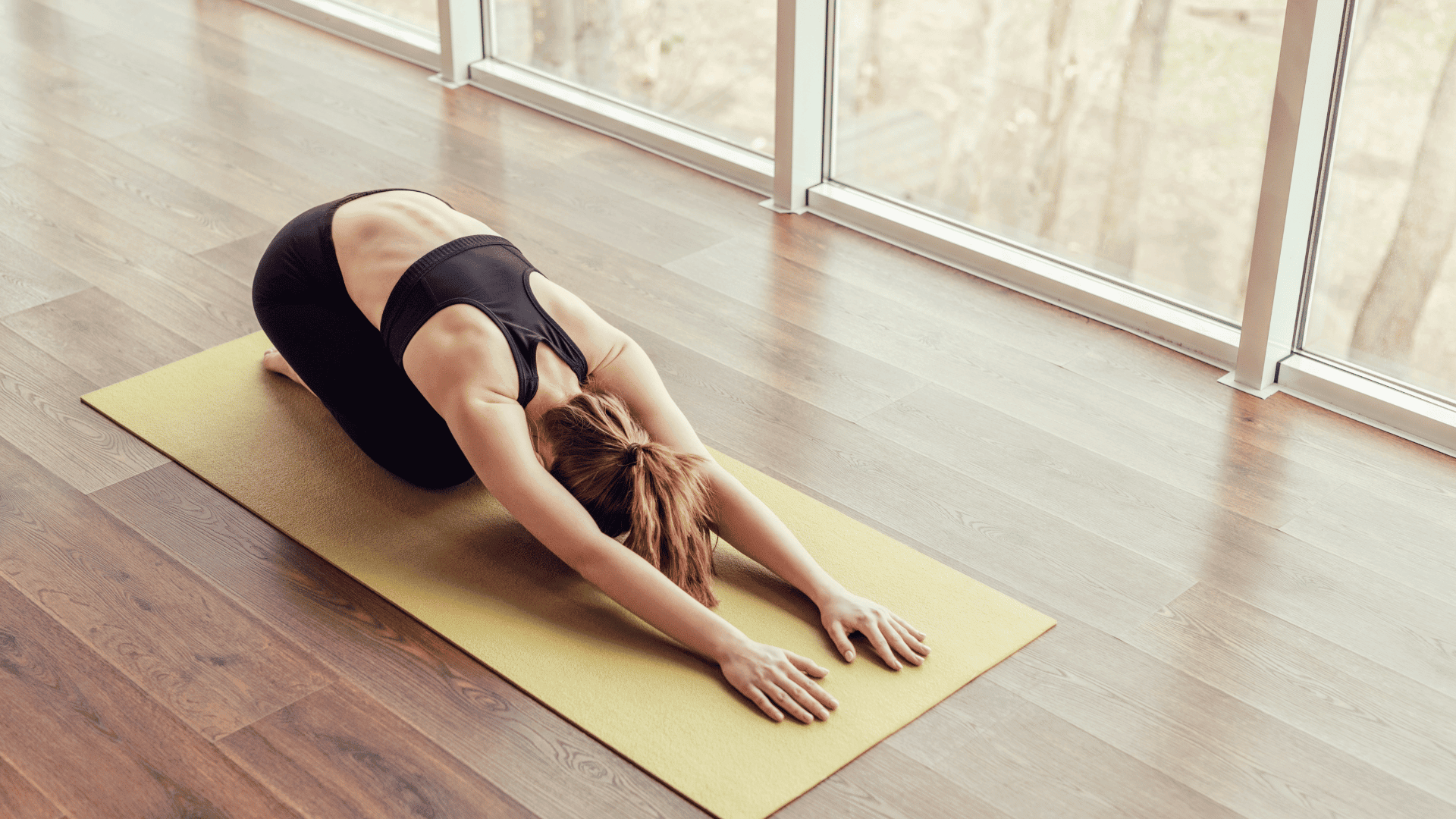
Targets: Lower back and hips
How to do it:
After Cat-Cow, keep your hands and knees on the floor. Slowly sit your hips back toward your heels and stretch your arms forward.
Let your forehead rest on the ground, or on a pillow if that’s more comfortable.
Take slow breaths and stay here for at least 30 seconds.
Cue to remember: Can’t reach your heels? No big deal. Just use a pillow under your hips. (It’s not cheating, it’s only a support)
3. Seated Forward Fold

Targets: Loosen your spine and the backs of your legs (especially your hamstrings).
How to do it:
Sit down with your legs straight out in front of you.
Take a breath in and sit up tall.
Then, as you exhale, hinge forward from your hips and reach toward your feet. Don’t worry how far you go, just let your hands land where they land.
Hold for 20 to 30 seconds.
Cue to remember: Lead with your chest, not your forehead. (Pretend you’re showing off a slogan tee, not diving for lost socks.)
4. Thread the Needle

Targets: Releases tension in your upper back, shoulders, and mid-spine.
How to do it:
Stay on all fours. Now take your right arm and slide it under your left arm, letting your right shoulder and cheek rest on the floor. Your left hand can stay where it is or reach forward for a deeper stretch.
Hold for about 30 seconds, then switch sides.
Cue to remember: Keep your hips stacked over your knees so the twist stays in your spine, not your lower back. (Think: twist and chill, not twist and shout.)
5. Knees-to-Chest
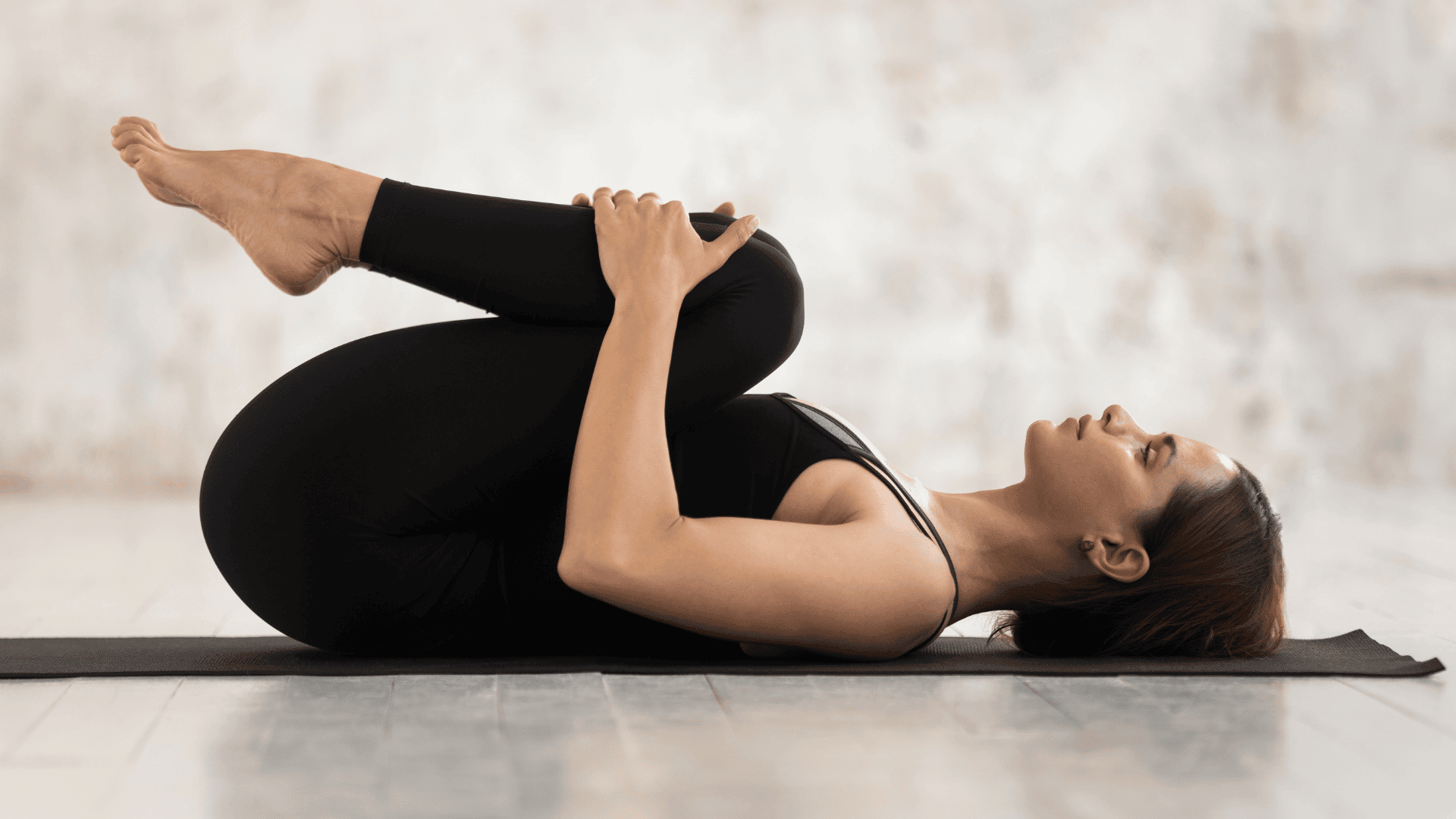
Targets: Gently stretches your lower back and hips. (perfect after a long day of sitting)
How to do it:
Lie on your back and bring both knees in toward your chest. Then, wrap your arms around your shins or the backs of your thighs.
You can stay still or gently rock side to side, whatever feels best.
Hold for about 30 seconds.
Cue to remember: Keep your shoulders down and your head resting flat.
6. Supine Twist
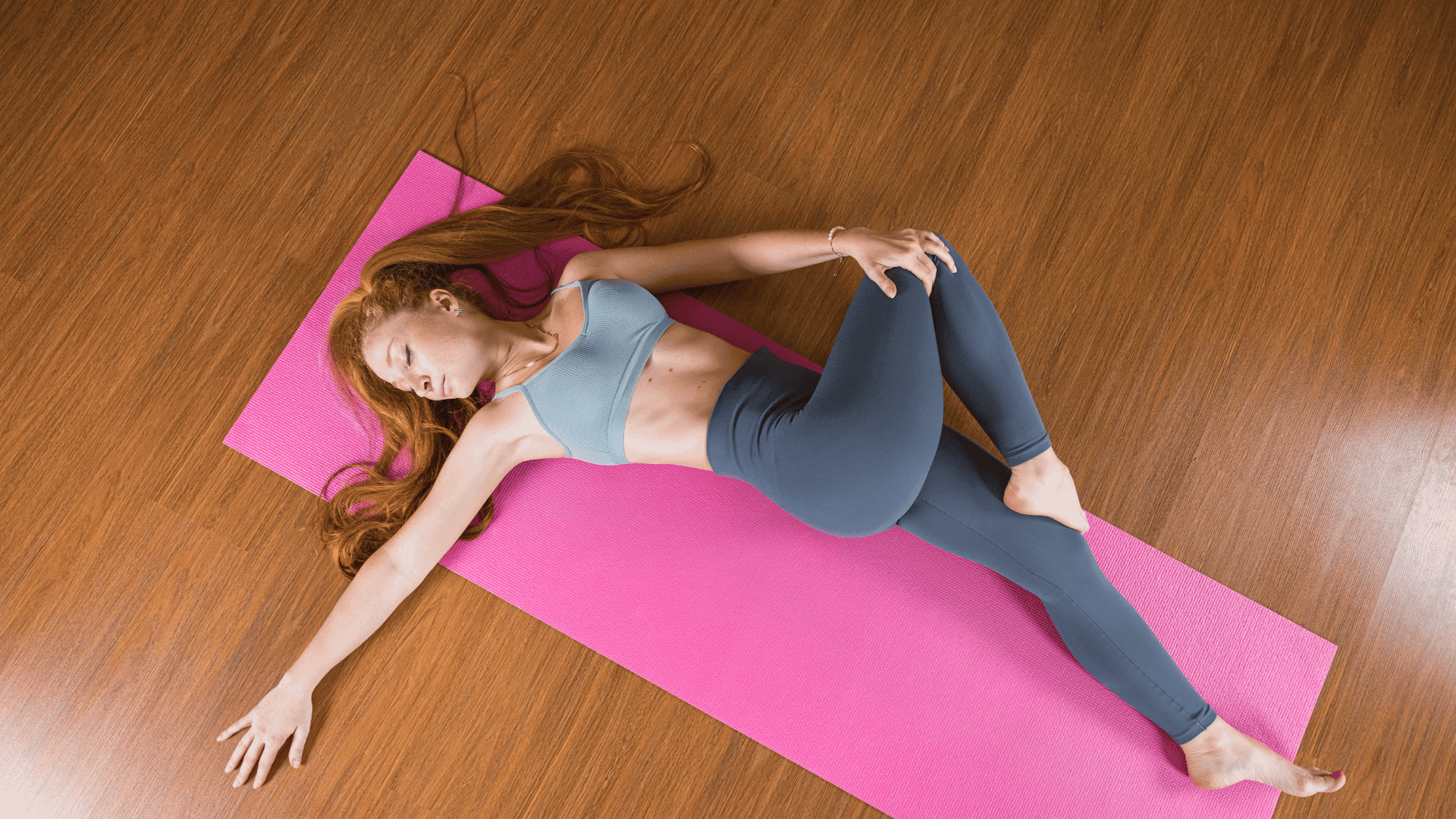
Targets: Loosens up your spine, lower back, and the outer sides of your hips.
How to do it:
Lie flat on your back and bend both knees. Then, gently let your knees fall to one side while keeping both shoulders flat on the floor.
For an extra stretch, turn your head in the opposite direction of your knees.
Hold for about 30 seconds, then switch sides.
Cue to remember: Don’t push your knees down, and just let gravity do the work. (If they don’t touch the floor, that’s totally fine. You’re not a pretzel.)
7. Standing Wall Stretch

Targets: Opens up your upper back, shoulders, and lats. (especially helpful if you’ve been hunched over your screen)
How to do it:
Stand a few feet from a wall and place both hands flat against it, arms straight out in front.
Step back slightly, then slowly lower your chest toward the floor. Keep your spine long and hips in line.
Hold for 20–30 seconds.
Cue to remember: Keep your head level with your arms and don’t let it drop.
8. Sphinx Stretch
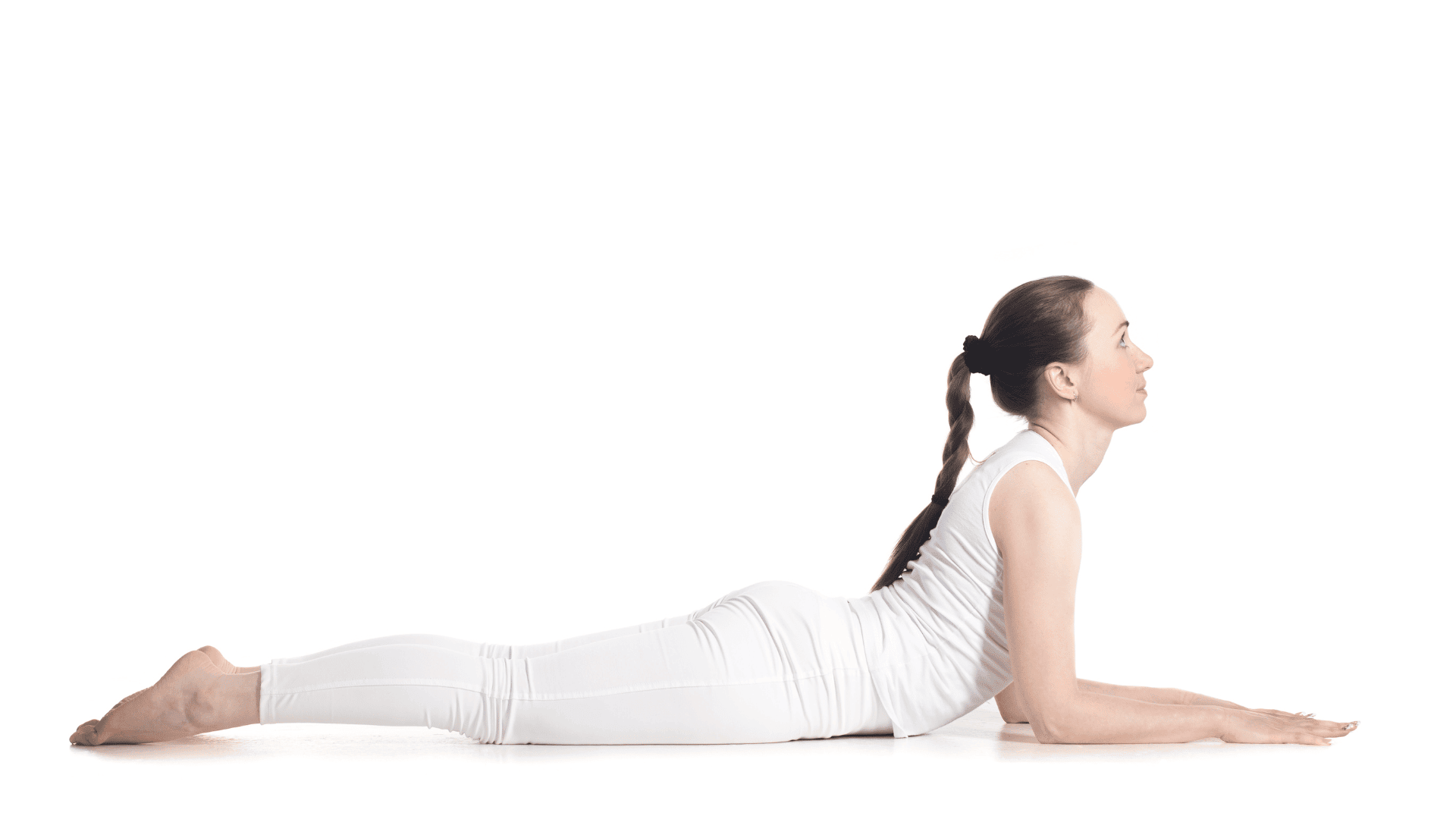
Targets: Gently stretches your lower back and opens the front of your spine.
How to do it:
First, lie flat on your stomach. Slide your forearms underneath you so your elbows are right below your shoulders.
Then, press into your forearms and lift your chest slightly. Keep your hips and legs relaxed on the floor.
Hold this for 20 to 30 seconds and take slow breaths.
Cue to remember: Keep your shoulders away from your ears.
9. Downward Dog

Targets: Stretches your spine, hamstrings, and calves. (all in one move)
How to do it:
To begin, start on your hands and knees with your hands shoulder-width apart and knees under your hips.
Next, tuck your toes under. Then slowly lift your hips up and back until your body forms a soft upside-down V shape.
If your hamstrings feel tight, go ahead and bend your knees slightly—no need to force anything.
Now, shift your focus to reaching your hips up toward the ceiling while gently pressing your chest back toward your thighs.
Finally, hold the stretch for 30 seconds and breathe deeply the entire time.
Cue to remember: Focus on lengthening your spine more than straightening your legs.
Tip: If any stretch feels too tight, ease off and breathe. This isn’t a pain contest. Stretching should feel like relief, not punishment.
When to Stretch Your Back (and When Not To)

Just like everything else in life…
Timing matters.
Stretching your back at the right time can make a big difference not just in how you feel, but in how safe and effective your routine is.
Best Times to Stretch Your Back
- In the morning – After sleeping, your spine can feel stiff. A few gentle stretches help wake up your body and improve movement for the day ahead.
- After sitting too long – If you’ve been at a desk or stuck in a car for hours, doing a few simple stretches helps release tightness in your lower back and shoulders.
- Post-workout – After strength training or a fat burning cardio workout at home, your muscles are warm and more flexible. That’s a perfect time to cool down with a few targeted back stretches.
When Not to Stretch
- Don’t stretch cold: If your body hasn’t moved at all yet, do a light warm-up first. March in place, swing your arms, or take a short walk to get your blood flowing. Stretching cold muscles can lead to strain.
- If pain feels sharp or sudden, stop: Stretching should never hurt. If you feel a sharp pinch or burning sensation, back off immediately. Don’t push through. If it lingers, it’s best to check in with a healthcare pro.
- Don’t force it: Stretching should feel like a release, not like you’re trying to win a flexibility contest. If you can’t breathe easily in a position, you’re probably going too far. Ease up and let your muscles relax into the movement.
Bottom line: Stretch when your body feels tight or tired, but always listen to it. More pressure doesn’t mean more progress.
Quick Tips for Better Stretching Results

You don’t need to be flexible to benefit from stretching; you just need a smart, consistent approach.
These simple tips will help you stretch better, feel more comfortable, and see real changes over time.
1. Breathe Slowly During Each Stretch
Your breath tells your body it’s safe to relax.
Instead of holding your breath, inhale through your nose and exhale slowly through your mouth. This helps your muscles loosen up and makes each stretch more effective.
Example: In Child’s Pose, take a deep breath in as you settle, then exhale and feel your hips melt closer to the floor.
2. Focus on Relaxing, Not “Pushing Further”
You don’t need to force your body into deep stretches. The goal is to feel tension ease, not pain increase. Let gravity do the work and stop where it feels good not where you think you “should” be.
Tip: If your shoulders or neck are tensing up, you’re probably overdoing it.
3. Use Pillows or Yoga Blocks If You’re Stiff
If you can’t comfortably reach the floor or stay in a stretch, prop yourself up. Pillows, rolled-up towels, or yoga blocks can make a big difference, especially for tight hips or hamstrings.
Example: Place a pillow under your knees in the Seated Forward Fold so your back stays relaxed and supported.
4. Stretch Daily, Not Just When It Hurts
Waiting until your back feels sore means you’re already too tight. The real magic happens when you stretch a little every day, even for just five minutes. It helps prevent tightness from building up in the first place.
Tip: Try stacking it with a habit, like stretching right after brushing your teeth or before bed.
5. Take a Posture Photo Before and After Two Weeks
It’s hard to notice change when you look at yourself every day.
So take a quick side-profile photo before you start your routine, no flexing, just stand naturally. Then, take another photo after 2 weeks of daily stretching.
You might notice your shoulders sit further back, your spine looks more aligned, or your head isn’t jutting forward. That’s progress you can feel and see.
Stretching isn’t about being bendy, it’s about moving better, standing taller, and feeling more at ease in your body.
Gentle Weekly Stretch Schedule

A flexible back isn’t built in one long stretch session; it’s the result of steady, daily effort.
This easy weekly workout scheduyle gives your body the care it needs without adding stress or taking too much time. You’ll stay loose, mobile, and ready for whatever your day brings.
Monday to Friday – 5-Minute Back Stretch Routine
Each weekday, go through your 5-minute back stretch routine (like the one in Section 3).
This keeps your spine moving, prevents tightness from building up, and supports better posture, especially if you’re sitting a lot.
Tip: Try to do it at the same time each day. Morning, lunch break, or before bed whatever fits your schedule.
Saturday – Optional Yoga Flow or Foam Rolling
On Saturday, give your body a little extra love. You can do a gentle yoga sequence focused on the spine, or use a foam roller to release built-up tension along your upper and lower back.
Idea: A few minutes of Downward Dog, Cat-Cow, and Supine Twist can go a long way.
Sunday – Full Rest or Light Walk + Stretch Combo
Your body needs rest just as much as movement. If you’re feeling tired or sore, take the day off.
But if a bit of light movement feels good, take a short walk and follow it with a couple of easy stretches with no pressure.
Reminder: Recovery helps your muscles reset, so don’t skip it.
This weekly rhythm gives your back what it really needs: consistency, variety, and time to recover. You’ll feel the difference within days.
You Deserve to Feel Better
Back pain isn’t just something that happens with age or because you’re out of shape.
More often than not, it comes from daily habits such as how long you sit, how little you move, and how often you ignore the signs of tension building up.
That’s why even a few minutes of stretching each day can make a huge difference. It’s not about doing a perfect routine or becoming super flexible overnight. It’s about showing up for yourself, one stretch at a time.
Each time you pause to breathe, loosen up your spine, and move with intention, you’re giving your body what it actually needs care, attention, and space to reset.
Bookmark this guide, send it to a friend who’s always saying “my back hurts,” or scroll back up and give it a try today.
One stretch can change how your whole body feels.
Make Back Care Part of Your Weekly Routine

If your back’s been feeling tight, it’s time to build a rhythm that supports it—without adding stress to your schedule.
Get the FREE Weekly Workout Schedule for short, simple sessions that include built-in stretch days, rest prompts, and routines you can actually stick to.
This plan helps you move smarter all week long without guessing what to do next
Frequently Ask Question
1. Can back stretches help with posture?
Yes, especially if your posture problems come from sitting, slouching, or looking down at screens. Regular stretching helps open up tight muscles in your chest, shoulders, and hips, which makes it easier for your spine to stay in a neutral, upright position. It won’t magically fix everything overnight, but it definitely helps retrain your body to sit and stand straighter.
2. How often should I stretch my back?
Ideally, aim for once a day even if it’s just 5 minutes. You can stretch in the morning to shake off stiffness, after long periods of sitting, or before bed to wind down. The more often you stretch consistently, the better your back will feel over time.
3. What if I feel pain during a stretch?
Stop immediately. Stretching should feel like a gentle pull, not sharp or sudden pain. If something hurts, your body is trying to tell you something. Ease out of the movement, skip that stretch, and if pain continues, it’s worth talking to a healthcare provider or physical therapist before continuing.
4. Can I do these at work or while traveling?
Yes most of these stretches are super space-friendly. Moves like seated forward folds, cat-cows (on a yoga mat or towel), and standing wall stretches can be done anywhere with a bit of room. They’re great for hotel rooms, airport lounges, or even a quick break between meetings.
5. How soon will I feel the results?
You might feel relief the same day especially if your back has been stiff or tight. Most people notice they move a little easier and stand a bit taller after just one session. For longer-term posture and flexibility improvements, give it at least 2 to 4 weeks of regular stretching to start seeing lasting change.


