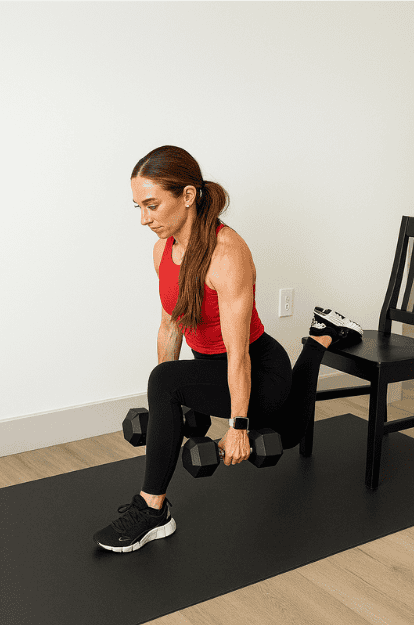
A Bulgarian split squat isn’t just a regular squat with a twist, it’s a simple full-body challenge disguised as a leg exercise.
You’ve got one foot elevated behind you, all your weight on the front leg, and suddenly balance, strength, and coordination all matter at once.
It’s one of those moves that looks simple on the outside but feels like a test the moment you try it.
That’s exactly why it’s worth learning.
This guide breaks down everything you need to know to do Bulgarian split squats the right way. You’ll get a clear 5-step walkthrough, helpful fixes for common mistakes, and simple tips to stay balanced from start to finish.
By the end, you’ll know how to make this move work for your body with proper form, better balance, and full control over every rep.
What Is a Bulgarian Split Squat?
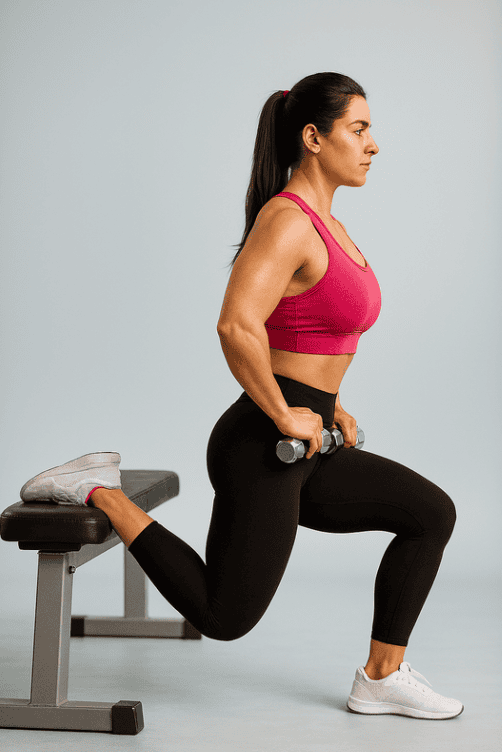
A Bulgarian split squat is a single-leg squat where your back foot rests on a raised surface, like a bench or a step. Your front leg does almost all the work, while your back leg helps with balance and stability.
At first glance, it might look like a lunge. But here’s the difference: in a regular lunge, both feet stay on the ground and your weight shifts between legs.
In a Bulgarian split squat, your back foot is elevated and your front leg carries most of your weight from start to finish.
This setup changes everything.
It puts more demand on your quads, glutes, and hamstrings, while also challenging your core and balance. You can’t cheat the movement. There’s no momentum to rely on. Just you, your front leg, and gravity doing its thing.
It’s not about how deep you go, it’s about how well you move.
And once you learn the setup, it becomes one of the most effective lower-body moves you can do with just your bodyweight.
5 Steps to Do Bulgarian Split Squats With Proper Form and Balance
You don’t need to rush this move. The setup matters just as much as the squat itself.
Follow these five steps in order and focus on staying steady, not just getting low.
1. Set Up the Rear Foot
Find a bench, box, step, or even a couch that’s about knee-height. Stand with your back to it and place the top of one foot (laces down) on the surface.
You can also tuck your toes if that feels more stable.
This step activates your hip stabilizers on both sides, especially the one on the back leg. Keep your chest upright and your shoulders relaxed.
Postural tip: Don’t arch your back to “stand tall.” Stay neutral.
Balance trick: Stand near a wall or use your arms to help counterbalance.
Muscles working: Hip flexors, glute medius, and deep stabilizers.
2. Position the Front Foot
Step the front foot forward so there’s enough space for you to drop straight down. Most people need more distance than they think.
If your heel lifts or your knee shoots forward later, your stance is too short.
Your front foot controls how much work your quads and glutes do. A shorter stance loads the quads more; a longer stance puts more into your glutes.
Postural tip: Keep your feet aligned, don’t let your front foot cross inward.
Muscles working: Quads and glutes (front leg), hip flexors (rear leg).
3. Find Your Balance Before You Move
Don’t drop straight into the first rep. Shift your weight into your front foot and test your balance. Engage your core and make sure your back leg feels supported, not tense or awkward.
This pause gives your core and ankle stabilizers time to activate. That makes the movement safer and more stable.
To keep your balance, focus your eyes on a still object a few feet in front of you. It helps center your head and spine.
Breathing cue: Inhale and brace before you move.
Muscles working: Core, glutes, and lower leg stabilizers.
4. Lower With Control
Bend your front knee and slowly lower your body straight down. Keep your chest tall and your hips square. Your back knee should move toward the floor, not forward. Only go as low as you can while staying balanced.
Don’t rush or bounce at the bottom. (The goal is control)
Postural tip: Keep your front knee in line with your toes, don’t let it collapse inward.
Breathing cue: Inhale on the way down.
Muscles working: Quads, glutes, and hamstrings on the front leg; stabilizers throughout the body.
5. Drive Back Up Without Wobbling
Push through the center of your front foot and mid-foot, not just your toes. Stand tall without leaning forward or snapping your hips.
As you rise, keep your chest lifted and your core braced. Avoid shifting side to side or rushing to the top.
Postural tip: Think about stacking your shoulders over your hips at the top.
Breathing cue: Exhale as you drive up.
Muscles working: Quads, glutes, and calves plus core for balance.
These five steps are the foundation.
If one feels off, pause and adjust before moving forward. Balance takes time, but once it clicks, the Bulgarian split squat becomes one of the most effective moves you can do.
Why Bulgarian Split Squats Are So Effective
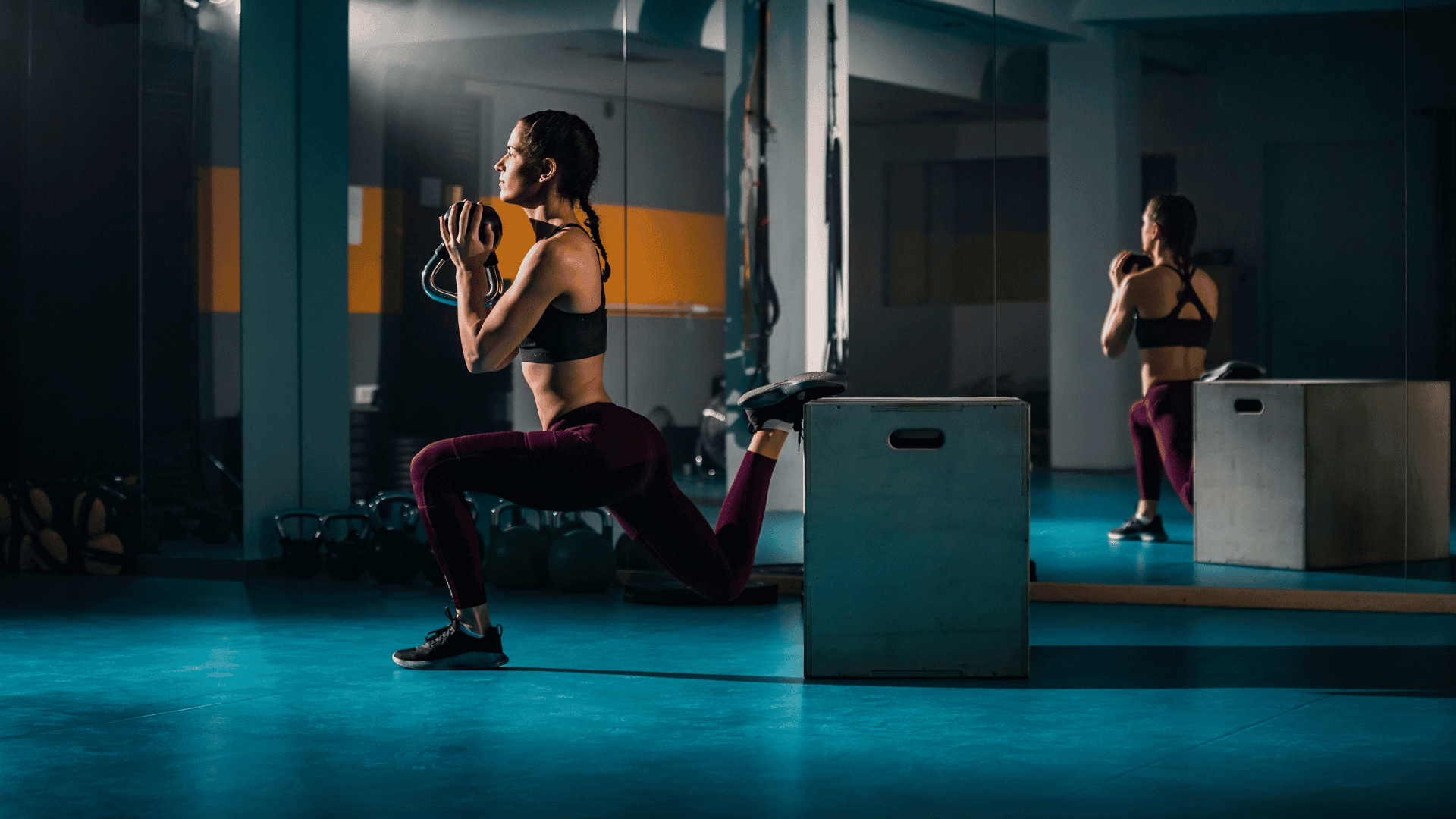
The Bulgarian split squat might look simple, but it challenges your body in ways most exercises don’t.
Because it’s a single-leg movement, it forces each side of your body to work independently. That helps fix strength imbalances you might not notice during regular squats or lunges. If one side is weaker, you’ll feel it and you’ll be able to train it directly.
It also offers better joint support over time. By loading your hips, knees, and ankles in a controlled way, this movement helps strengthen the muscles that protect your joints during real-world activities like walking, climbing stairs, or picking something up off the floor.
Another reason it’s so effective?
You don’t need heavy weight to make it challenging. Even just your bodyweight, especially when done with pauses or tempo, is enough to build strength, stability, and control.
And because it demands balance and coordination, it’s naturally a functional movement. It teaches your body to move better, not just lift more. The benefits show up not only in the gym, but in how you move throughout the day.
Modifications and Progressions
Bulgarian split squats aren’t easy right away and that’s normal. If balance feels tricky or you’re not ready for full-depth reps, there are ways to make it more manageable.
And when you’re ready to push further, there are simple ways to level up, too.
If you’re working on balance or just starting out:
- Hold onto a wall or rail. You don’t get extra points for wobbling. Use one hand for support until you feel steady.
- Use a lower surface. A step, yoga block, or short bench makes it easier to control your back leg and stay upright.
- Shorten your range of motion. You don’t have to go deep on day one. Lower only as far as you can while keeping form solid.
When it starts to feel easier:
- Add a pause at the bottom. Holding for 1–2 seconds increases control and strength without adding weight.
- Use tempo reps. Try a slow 3-second descent, short pause, then a strong push to the top. This adds tension and teaches control.
- Add dumbbells or a kettlebell. Hold one weight at your chest (goblet-style) or a dumbbell in each hand to increase resistance.
Progress isn’t about rushing. Whether you’re stabilizing with a wall or holding extra weight, the goal is the same: strong, balanced movement rep after rep.
Common Mistakes to Avoid
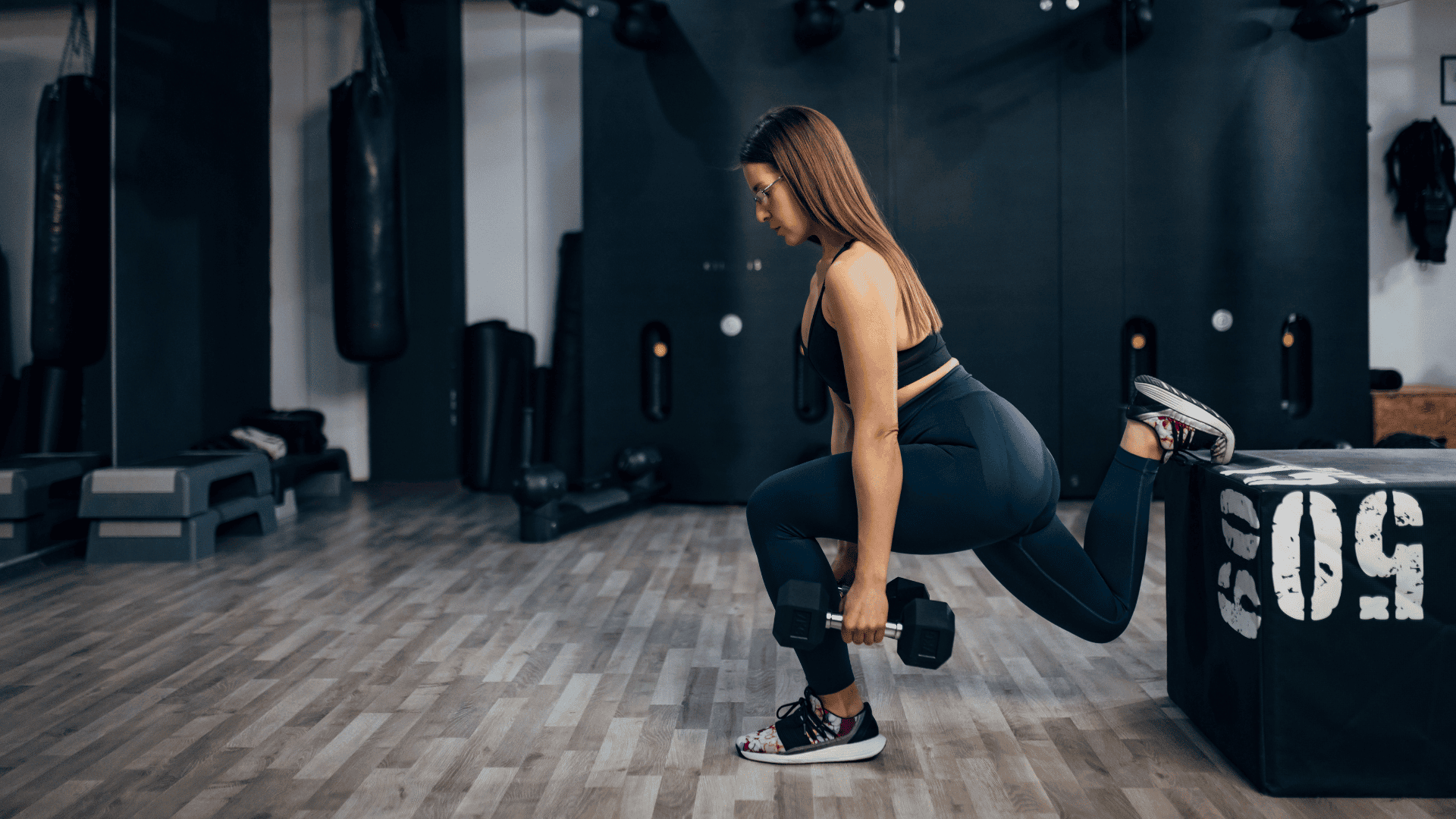
Even when you follow all the steps, it’s easy to fall into small habits that throw off your form. The key is knowing what to look for so you can spot it early and make a quick adjustment.
One of the most common mistakes is letting your front knee shoot too far forward. This usually means your stance is too short, or you’re leaning too far over your foot. To fix it, step your front foot out a little farther and think about dropping your back knee down, not forward.
Another issue is your hips twisting or dropping to one side as you lower. This often happens when your core isn’t fully engaged or your feet aren’t aligned. Try keeping your shoulders and hips square to the front, and slow down the movement to catch any drift before it throws you off.
Some people also rush through the reps or bounce at the bottom, especially when they’re trying to finish a set fast. But speed usually leads to sloppy movement. Instead, keep your pace steady. Lower with control, and drive up with intention not bouncing.
Lastly, an unstable setup can ruin the whole thing. If your back foot is too close to the bench or you feel cramped, reset. You should feel grounded and balanced before you even start your first rep.
When something feels off, don’t push through it. Pause, adjust, and move again. Small changes in your setup or pace can make a big difference in how the whole rep feels and how much your body gets out of it.
When and How to Use It in Your Routine
You don’t need to do Bulgarian split squats every day to see results.
In fact, just adding them 2 to 3 times a week can be enough to build strength, improve balance, and feel more stable on your feet.
For best results, use them early in your workout, when your legs are fresh and your balance is sharp. This helps you focus on form before fatigue sets in. If your legs are already tired, it’s much harder to stay stable and move with control.
Bulgarian split squats pair well with deadlifts, lunges, or glute bridges, especially on lower body or leg-focused training days. You can also plug them into easy bodyweight circuit for a home workout that doesn’t need any equipment.
And if you’re short on time, they’re strong enough to stand on their own. A few slow, focused sets of split squats can give your legs and core a serious challenge even without weights.
The key is consistency.
Drop them into your routine 2–3 times a week, stick to good form, and you’ll start noticing real progress one side at a time.
Train Smarter, One Leg at a Time
Split squats aren’t easy, but that’s exactly what makes them valuable. This movement trains your legs to be strong on their own, while building the kind of balance and control that carries over into everything else you do.
You don’t need a gym. You don’t need heavy weights.
You just need good form, a bit of space, and a plan that makes sense.
Focus on the basics first. Set up with intention. Move with control. And when it starts to feel solid, that’s when you add challenge, whether that’s more reps, a pause, or a dumbbell.
Do it consistently, and you’ll build not just strength, but confidence in how your body moves, one leg at a time.
Add Structure to Your Leg Workouts

Learning Bulgarian split squats is a powerful step for building strength, balance, and coordination.
But one exercise alone isn’t enough, the best results come when it’s part of a full training plan. That’s where the Free Weekly Gym Workout Plan for Women fits in.
This guide shows you how to schedule lower-body strength moves like Bulgarian split squats alongside other workouts so your week feels balanced and effective. No more guessing which day to train legs or how to pair exercises together.
Instead, you’ll follow a simple plan that keeps you consistent, prevents burnout, and builds strength you can see and feel.
Frequently Asked Questions
1. Why is it called a Bulgarian split squat?
The name comes from the Bulgarian national weightlifting team, who popularized this variation in their training. It’s also sometimes called a rear-foot elevated split squat but “Bulgarian” stuck.
2. What if I can’t balance at all?
Start by holding onto a wall, chair, or railing. You can also lower the surface behind you or shorten the range of motion until it feels more stable. Balance improves with practice, so don’t skip the setup just adjust it.
3. How far apart should my feet be?
Your front foot should be far enough forward so that, when you lower down, your front knee stays over your ankle not past your toes. If you feel cramped or like you’re tipping forward, step your front foot out a little more.
4. Is this better than lunges or squats?
Not better, just different. Bulgarian split squats focus on one leg at a time, which helps correct strength imbalances and improve balance. Squats and lunges are still valuable. Each has its place, and they can all work well together.
5. Can I do these with dumbbells or just bodyweight?
You can do both. Start with bodyweight to get the form right. Once you feel stable and strong, add dumbbells or a kettlebell to increase the challenge. Even a single weight held at your chest works great.


